

Why Choose the DOF6000 Open Channel Flow Meter?
No flume to build. No pipe to cut. One submerged sensor at the flow itself.
Open channels and partially filled pipes defeat closed-pipe meters. Full-bore magnetic, vortex, and turbine meters need a completely flooded line; weirs and flumes need civil works and cleaning. The DOF6000 puts one submerged Doppler sensor at the flow itself — no flume to build, no pipe to cut.
1. What Is the DOF6000 Open Channel Flow Meter?
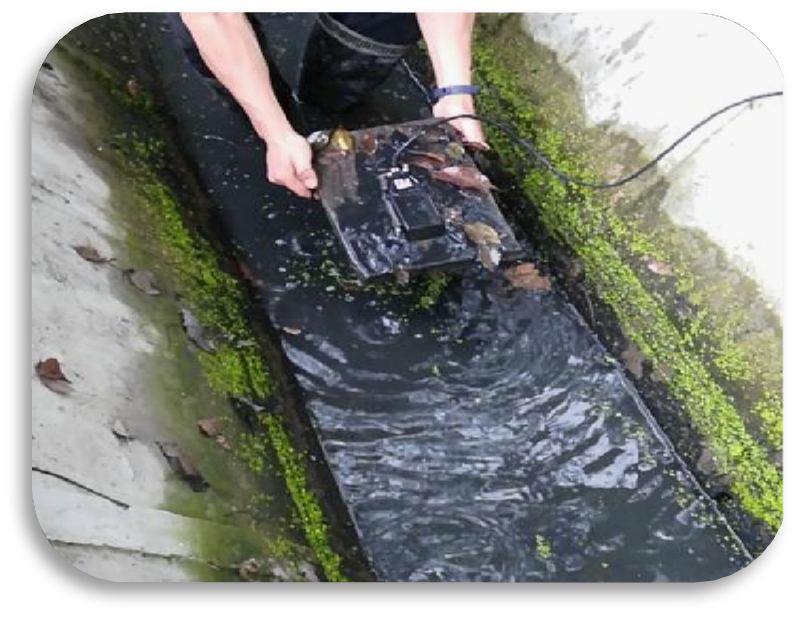
The DOF6000 is a Doppler-based open channel and partially filled pipe flow meter. It pairs a flow calculator with the Ultraflow QSD 6537 submerged sensor, using the area-velocity principle to measure flow directly in the water — no flume, no weir, and no pipe cutting required. The sensor sits on the invert of the channel or pipe, measures velocity by Doppler shift, and reads depth by both ultrasonic and pressure sensing, so the calculator can continuously compute flow rate Q = V × A.
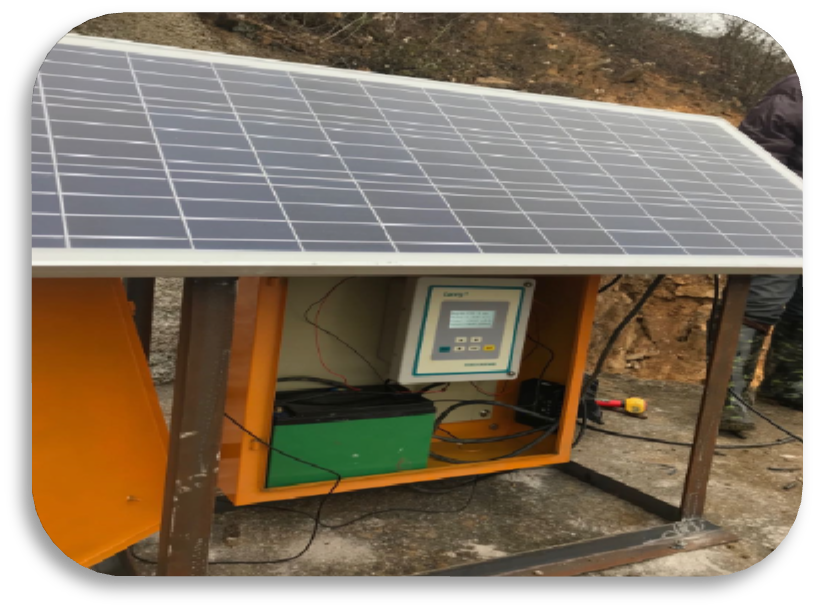
Because the instrument works with the natural channel shape, it is especially suited to retrofit and monitoring sites where building a hydraulic structure is expensive or impossible. Up to 20 coordinate points describe an irregular cross-section, and velocity is measured in both forward and reverse directions, which makes the DOF6000 suitable for tidal, backwater, and partially filled pipe applications. The system logs velocity, depth, temperature, and conductivity on board, and outputs the data through 4–20 mA, pulse, RS485 Modbus, SDI-12, and optional GPRS, aligning with today's demand for remote IoT-based monitoring.


Wall-mounted Partially Filled & Open Channel Flowmeter
Portable Partially Filled & Open Channel Flowmeter
2. Why Choose the DOF6000?
Key features:
|
Up to 20 coordinate points describe the cross-section of the river's natural shape.
|
One instrument measures velocity, depth and conductivity simultaneously.
|
|
Velocity range: 0.02 mm/s to 12 m/s, bi-directional, accuracy ±1%.
|
Depth range: 0 to 10 m, with pressure and ultrasonic dual measurement.
|
|
Measures velocity in both forward flow and back flow.
|
IP68 epoxy-sealed body, designed for underwater installation.
|
|
Depth is measured by both the pressure sensor and the ultrasonic level sensor.
|
Portable type with rechargeable battery can work up to 50 hours.
|
3. How the DOF6000 measures flow?
The DOF6000 works on the area-velocity principle: flow rate equals the average water velocity multiplied by the cross-sectional flow area, Q = V × A.
Like a swimmer crossing a flowing river, the submerged ultrasonic sensor transmits acoustic pulses that bounce off suspended particles and bubbles in the water. The frequency shift between the transmitted and received signals gives the water velocity — the Doppler method. At the same time, depth is measured two ways: an ultrasonic level sensor measures the water surface from above, and a pressure sensor measures the hydrostatic head from below, with barometric compensation. Combining the measured velocity with the water depth and the 20-point channel shape, the calculator continuously computes the flow rate.
The DOF6000 pairs a flow calculator with the Ultraflow QSD 6537 submerged sensor on the area-velocity principle:
Acoustic pulses bounce off suspended particles and bubbles; the frequency shift gives water velocity. Depth is read two ways on the same body — ultrasonic level on top, pressure at the bottom, barometrically compensated. Temperature and conductivity (0–200,000 µS/cm) are logged too.

The Ultraflow QSD 6537 submerged sensor — velocity, ultrasonic depth, pressure depth and conductivity.
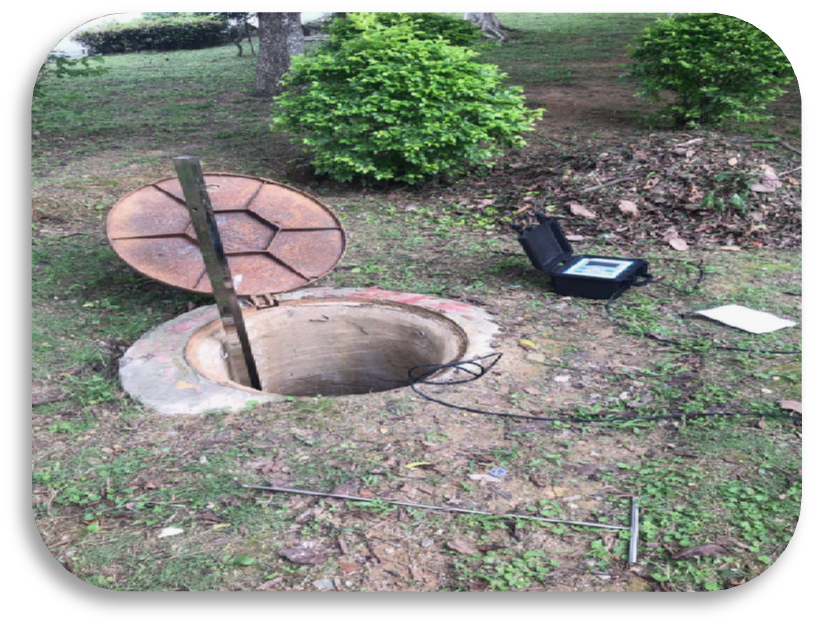
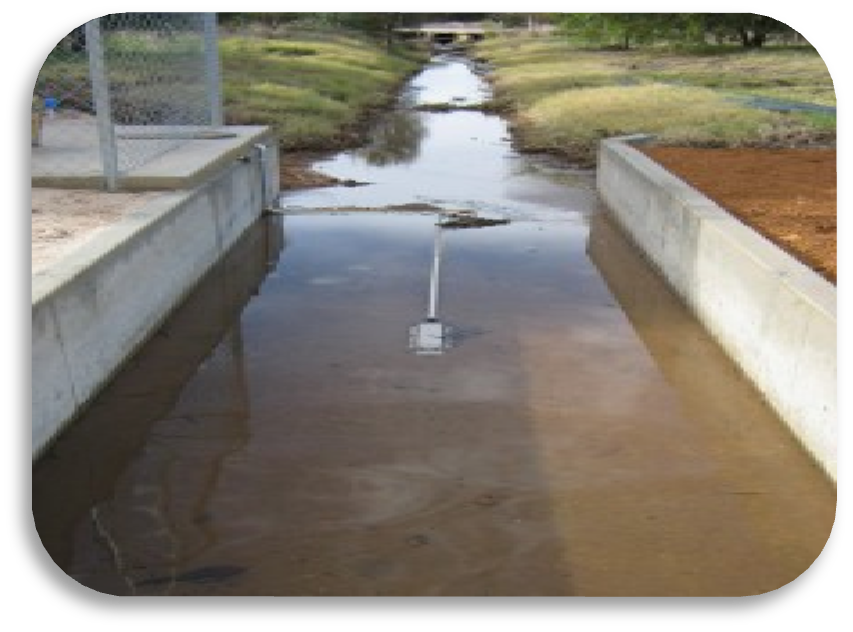
4. Where Can the DOF6000 Be Applied?
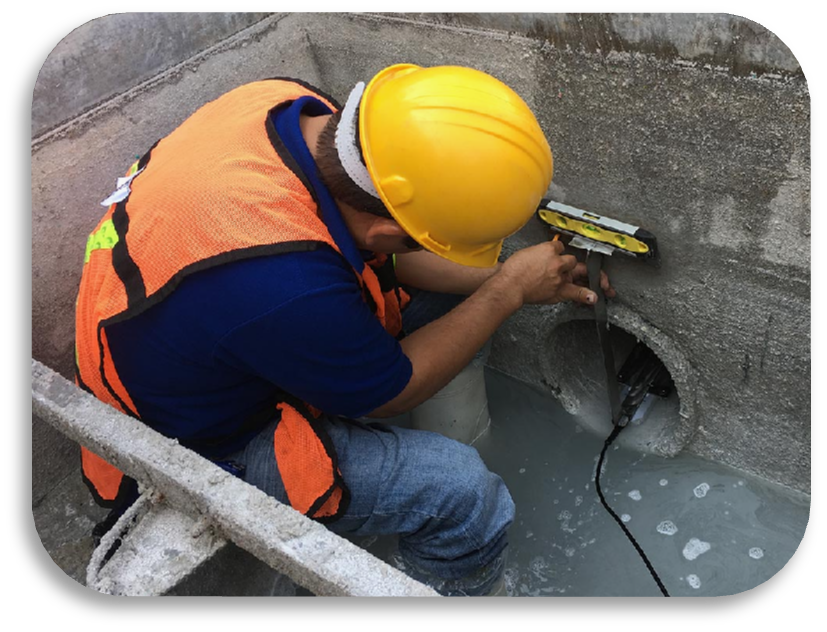
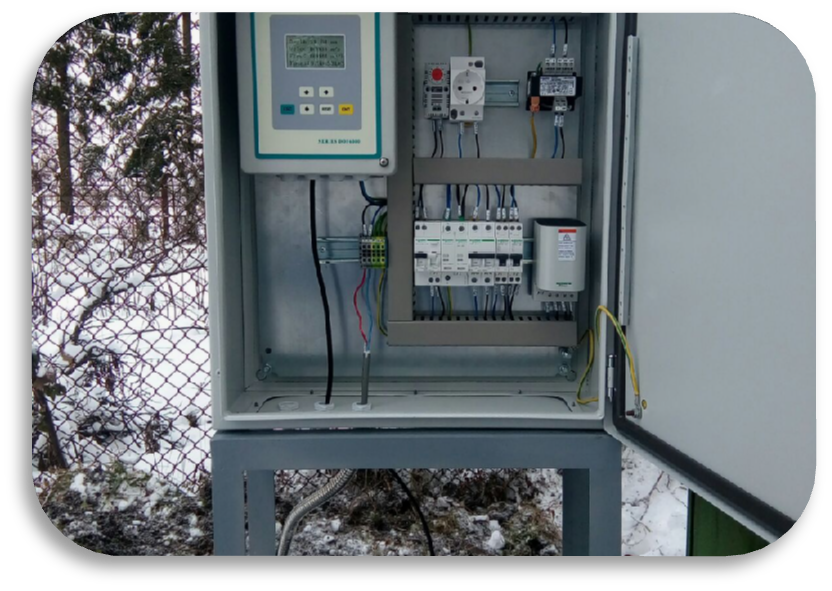
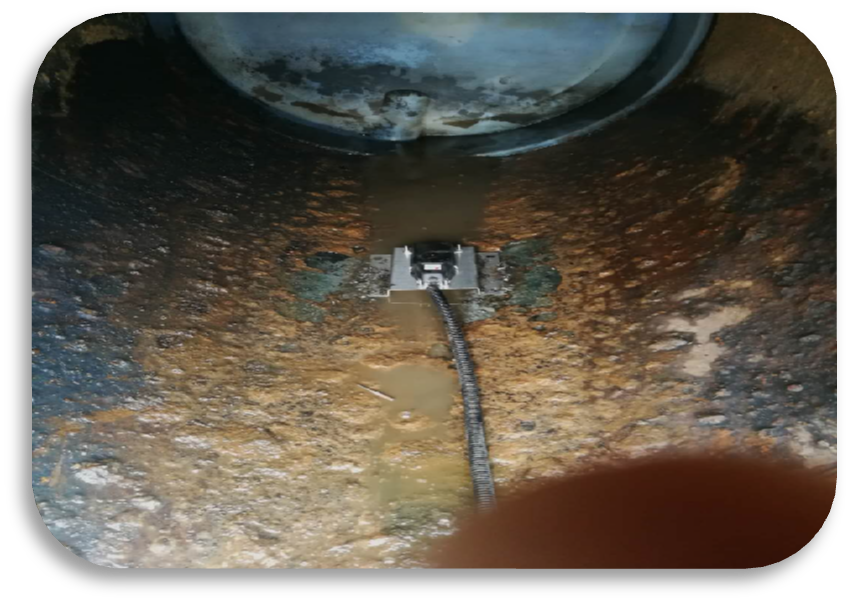
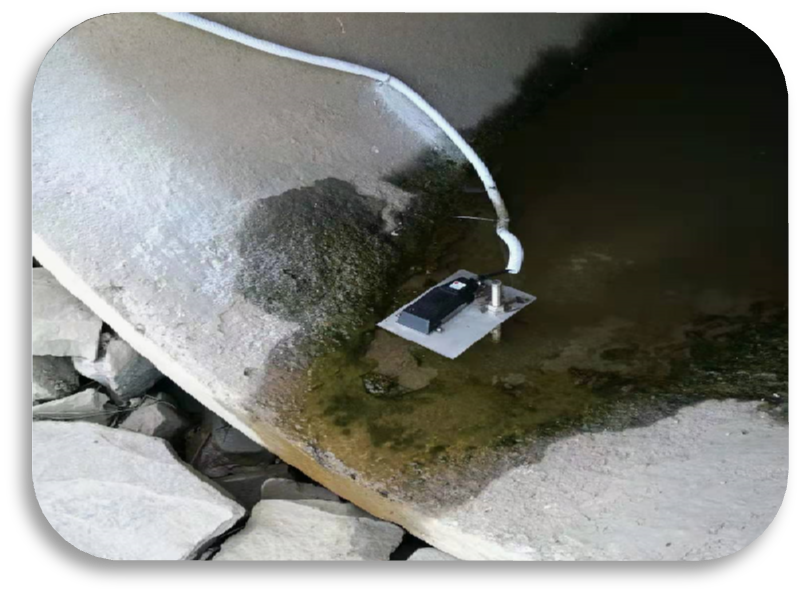
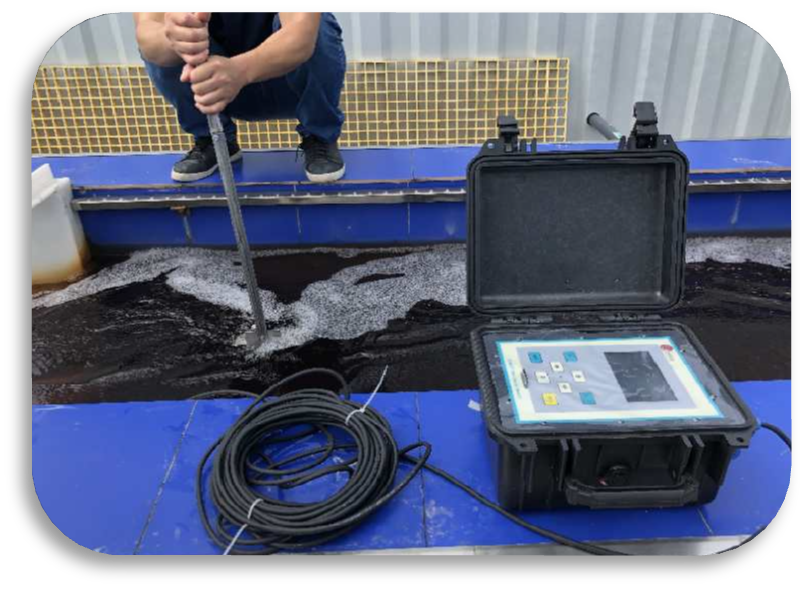
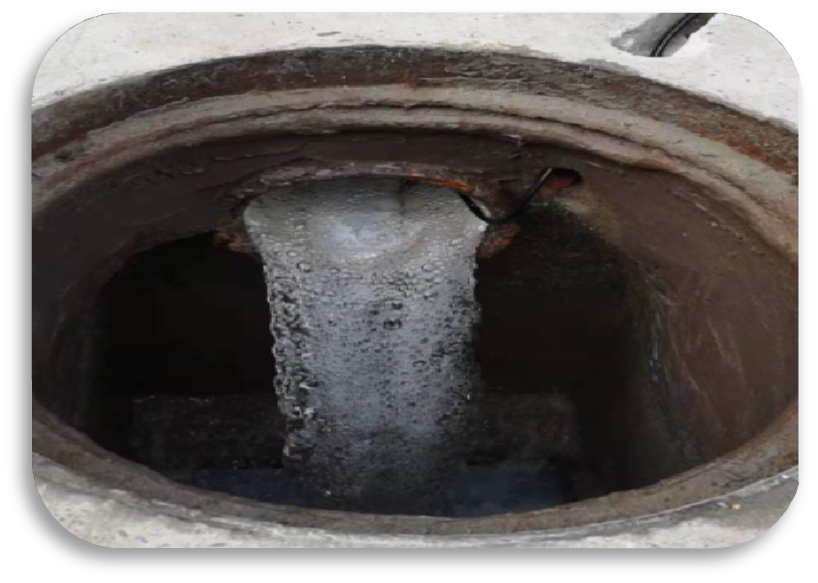
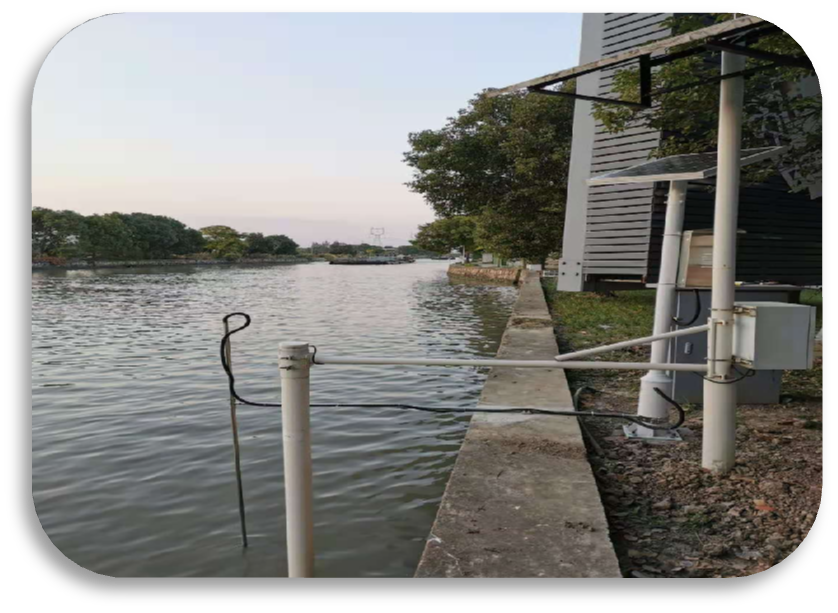
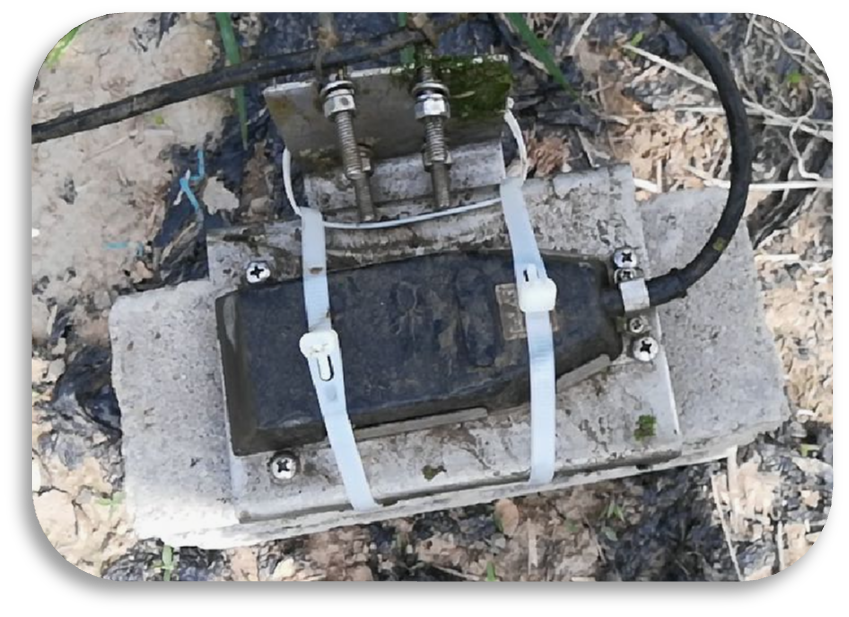
5. When it works — and when it doesn't
• Retrofit where civil works are impossible
• Partially filled pipes, DN150–6000
• Tidal / backwater sites (reverse flow)
• Irregular natural channels
• Very shallow / drying-up channels
• Long stagnant reaches (do a reach survey)
• Full-pipe closed-conduit metering
Video 1. DOF6000 product overview — working principle and application.
FAQ
Why can't I just use a magnetic or vortex meter for an open channel?
Magnetic and vortex meters need a completely full pipe with water touching the whole cross-section. With air above the waterline in an open channel or partially filled pipe, there is nothing for them to measure — that is exactly the gap the DOF6000 fills.
Do I need to build a flume or weir?
No. The DOF6000 sits one submerged sensor directly in the flow and measures velocity and depth. You skip the concrete works, the long upstream straight reach, and the regular desilting that a flume or weir requires.
Does installation require cutting the pipe or shutting down the flow?
No. The sensor mounts on the invert or a hoop bracket through an access point. There is no pipe cutting and no process interruption, which is why it is so popular for retrofitting existing sewers and culverts.
Why won't it measure clean water?
Doppler flow needs suspended particles or bubbles to bounce the sound off. In perfectly clean water there is no reflector, so the signal returns nothing. For clean liquids, a transit-time ultrasonic meter is the right choice.
What size pipes and channels can it handle?
Partially filled pipes from DN150 up to DN6000, and open channels wider than 200 mm. Irregular, natural channel shapes are traced with up to 20 coordinate points instead of being forced into a rectangle.
How accurate is it, and does it need field calibration?
Velocity accuracy is ±1% of reading over 0.02 mm/s – 12 m/s. The meter ships factory-calibrated; on site you mainly enter the real channel shape and invert offset. A simple comparison run under known flow is enough verification.
How do I send the data to my SCADA or remote system?
Through RS485 Modbus (up to 500 m), SDI-12 (up to 50 m), 4–20 mA, pulse, or GPRS. A 16 GB on-board logger stores readings even when communications drop, so you never lose data.
Which should I choose — wall-mounted or portable?
Go wall-mounted for a permanent monitoring or compliance station. Choose the portable case unit for surveys, temporary checks, or moving between sites — it runs about 50 hours on its rechargeable battery.
Can it handle dirty wastewater, solids, and grease? Will the sensor wear?
Yes — that is its home ground. The IP68 epoxy-sealed body has no moving parts, so solids do not wear it. For very greasy sewage, just wipe the face occasionally; the dual pressure + ultrasonic depth reading also flags a blocked ultrasonic face.
Tell us your channel — we'll size the meter
Share your channel geometry, expected velocity range, and telemetry needs. The Lanry team will recommend the wall-mounted or portable configuration.
Hello, I'm Michael Yang, Sales Engineer at Lanry Instruments. With over 8 years of hands-on experience in the flow-measurement industry, I draw on deep technical expertise to deliver targeted sales technical advice and optimized product configurations to maximize measurement performance for your industrial customers. Feel free to contact our WhatsApp.
Post time: Sep-22-2026
Send your message to us:
- English
- Chinese
- Chinese
- French
- German
- Portuguese
- Spanish
- Russian
- Japanese
- Korean
- Arabic
- Irish
- Greek
- Turkish
- Italian
- Danish
- Romanian
- Indonesian
- Czech
- Afrikaans
- Swedish
- Polish
- Basque
- Catalan
- Esperanto
- Hindi
- Lao
- Albanian
- Amharic
- Armenian
- Azerbaijani
- Belarusian
- Bengali
- Bosnian
- Bulgarian
- Cebuano
- Chichewa
- Corsican
- Croatian
- Dutch
- Estonian
- Filipino
- Finnish
- Frisian
- Galician
- Georgian
- Gujarati
- Haitian
- Hausa
- Hawaiian
- Hebrew
- Hmong
- Hungarian
- Icelandic
- Igbo
- Javanese
- Kannada
- Kazakh
- Khmer
- Kurdish
- Kyrgyz
- Latin
- Latvian
- Lithuanian
- Luxembou..
- Macedonian
- Malagasy
- Malay
- Malayalam
- Maltese
- Maori
- Marathi
- Mongolian
- Burmese
- Nepali
- Norwegian
- Pashto
- Persian
- Punjabi
- Serbian
- Sesotho
- Sinhala
- Slovak
- Slovenian
- Somali
- Samoan
- Scots Gaelic
- Shona
- Sindhi
- Sundanese
- Swahili
- Tajik
- Tamil
- Telugu
- Thai
- Ukrainian
- Urdu
- Uzbek
- Vietnamese
- Welsh
- Xhosa
- Yiddish
- Yoruba
- Zulu
- Kinyarwanda
- Tatar
- Oriya
- Turkmen
- Uyghur