

Why Choose the DOF6000 Open Channel Flow Meter?
No flume to build. No pipe to cut. One submerged sensor at the flow itself.
Open channels and partially filled pipes defeat closed-pipe meters. Full-bore magnetic, vortex, and turbine meters need a completely flooded line; weirs and flumes need civil works and cleaning. The DOF6000 puts one submerged Doppler sensor at the flow itself — no flume to build, no pipe to cut.
Why free-surface flow is hard to measure
That leaves the retrofit problem: an existing sewer, culvert, or outfall that was never built around a hydraulic structure — where civil works are expensive or impossible.
How the DOF6000 measures flow
The DOF6000 pairs a flow calculator with the Ultraflow QSD 6537 submerged sensor on the area-velocity principle:
Acoustic pulses bounce off suspended particles and bubbles; the frequency shift gives water velocity. Depth is read two ways on the same body — ultrasonic level on top, pressure at the bottom, barometrically compensated. Temperature and conductivity (0–200,000 µS/cm) are logged too.
Key features
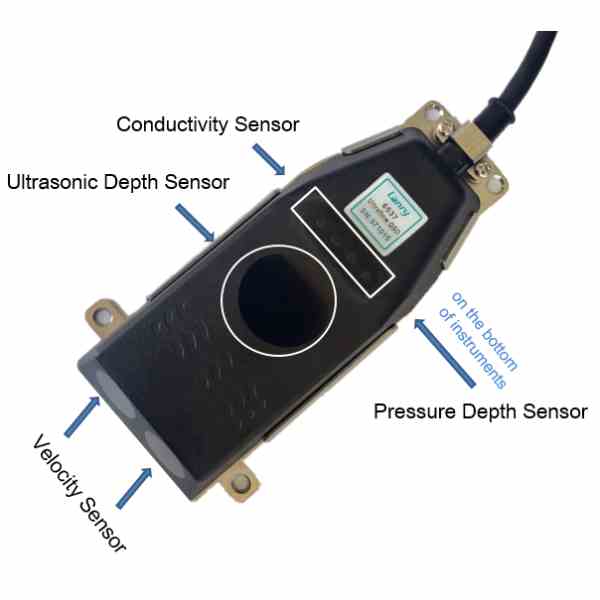
Figure 1. The DOF6000 sensor installed on the invert of a half-round concrete channel.
Figure 2. Hoop mounting installation of the submerged sensor on a pipe or channel wall.
Where it fits
Stormwater & culverts
Industrial wastewater
Irrigation channels
Rivers & streams
Environmental outfalls
Two form factors: wall-mounted for permanent stations, or a portable case unit for surveys. Both get a 4.3″ color display, 16 GB logger, and pulse / 4–20 mA / RS485 / GPRS outputs.
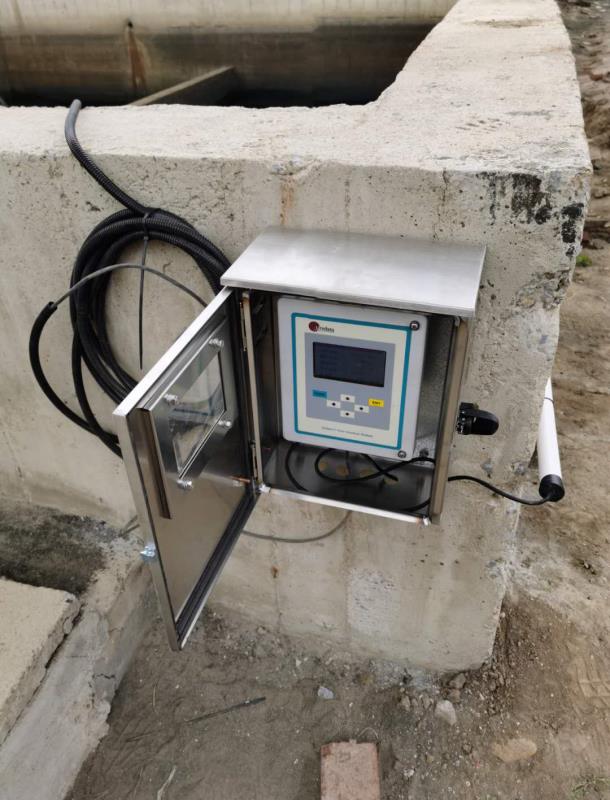
Figure 3. The wall-mounted DOF6000 calculator housed in a stainless steel protection enclosure.
Three routes compared
Our weir vs. flume guide → covers the hydraulic structures in depth.
| Consideration | Weir / Flume | Full-pipe meter | DOF6000 |
|---|---|---|---|
| Civil works | Yes | No | No |
| Partially filled pipe | With structure | No | Yes |
| Upstream reach | 10–20× depth | Required | Minimal |
| Solids / sediment | Weirs foul | N/A | Immersed |
Same-class Doppler rivals are typically ±2–5%; the DOF6000 is specified at ±1%R across 20 mm/s–12 m/s. Radar is a fourth option for heavily fouling sites.
DOF6000 specifications
| Parameter | Value |
|---|---|
| Velocity | 20 mm/s – 12 m/s, bidirectional; ±1%R; resolution 1 mm/s |
| Depth (ultrasonic) | 20 mm – 5 m; ±1 mm; resolution 1 mm |
| Depth (pressure) | 0 – 10 m; ±2 mm; barometric compensation |
| Temperature | 0 – 60 °C; ±0.5 °C |
| Conductivity (EC) | 0 – 200,000 µS/cm; ±1%R |
| Pipe / channel | Partially filled DN150 – DN6000; open channel width > 200 mm |
| Outputs | RS485 Modbus RTU (≤500 m), SDI-12 v1.3 (≤50 m), pulse, 4–20 mA, GPRS |
| Logger / display | 16 GB on-board; 4.3″ color LCD |
| Power | 85–265 VAC; 12–24 VDC (wall); portable battery ~50 h (mfr rated) |
| Enclosure | Calculator IP66; sensor IP68 epoxy-sealed, 316SS bracket; cable 15 m / up to 500 m |
Source: DOF6000 data sheet (Lanry Instruments, Shanghai). Figures are manufacturer specifications.
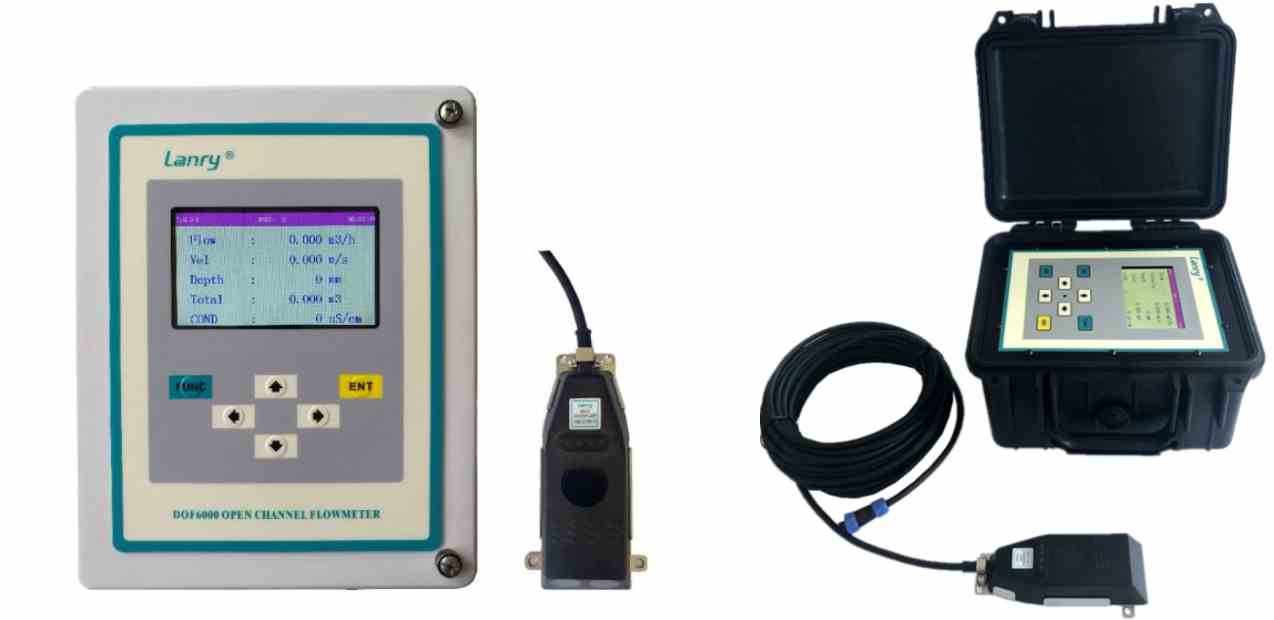
Figure 4. The DOF6000 wall-mounted calculator installed beside a monitoring channel.
When it works — and when it doesn't
• Retrofit where civil works are impossible
• Partially filled pipes, DN150–6000
• Tidal / backwater sites (reverse flow)
• Irregular natural channels
• Very shallow / drying-up channels
• Long stagnant reaches (do a reach survey)
• Full-pipe closed-conduit metering
FAQ
Video 1. DOF6000 product overview — working principle and application.
Tell us your channel — we'll size the meter
Share your channel geometry, expected velocity range, and telemetry needs. The Lanry team will recommend the wall-mounted or portable configuration.
Hello, I'm Erik, Technical Engineer at Lanry Instruments. I studied Automation at university, with more than 20 years of hands-on experience within the instrumentation sector. My work covers product R&D, on-site commissioning and testing. Leveraging my deep-rooted industry expertise, I can offer you professional technical guidance for all your industrial measurement projects. Feel free to contact me
Post time: Sep-21-2026